Jenganet For Winforms Repack Review
He named the repackaging script “jenganet-repack.” The script’s goal was simple: gather the WinForms binaries and their configuration files, fix any runtime binding redirects, ensure the correct .NET Framework or compatibility shim was present, and create a signed ZIP plus an executable bootstrap for distribution. But the executable refused to run in the test VM without the expected runtime. Amir tracked down the app’s .config and found an assembly binding redirect that targeted a patched version of a serialization library the company had once maintained privately. That library was gone.
Security required attention too. The app’s sync protocol sent plaintext payloads. While the repack’s mission wasn’t to re-architect the protocol, Amir added optional local encryption: the bootstrap could generate a per-installation key and keep the data at rest encrypted, and the stubbed service accepted an encrypted tunnel for local-only use. He wrote clear notes in the repack README explaining that end-to-end security across networks remained a future task, but at least the repack would not leave user data trivially exposed on disk. jenganet for winforms repack
The project had a name in the repository notes—“jenganet”—but no documentation. The binary’s icon still bore a faded logo: a stylized jenga tower balanced on a network node. The README was a single line: “jenganet: clientsync for legacy WinForms.” Amir opened the executable with a resource inspector and found strings that hinted at behavior: TCP endpoints, serialized settings, a custom protocol for syncing small datasets between clients. He could imagine an old team clustering laptops in meeting rooms to synchronize contact lists over ad-hoc networks. He named the repackaging script “jenganet-repack
But launching wasn’t enough. The app expected a peer discovery protocol on UDP and attempted to contact a default service host that no longer existed. When Amir inspected network traces, he realized the app used cleartext JSON messages over TCP and a tiny binary handshake for versioning—ancient cruft, but manageable. To preserve behavior while avoiding outbound connections to nonexistent hosts, he created a lightweight local stubbed service that mimicked the original server’s API. The repack would include the stub as an optional helper service, launched in the background by the bootstrapper for users who wanted the simplest out-of-the-box experience. That library was gone
One evening, months later, Amir found himself looking at the jenga tower logo again, thinking about balance—how small pragmatic moves could keep systems standing long enough for bigger migrations to be planned. The repack didn’t solve every problem, but it bought the company the time and credibility to plan a proper modernization. In the world of software maintenance, sometimes the best move is not to topple the tower but to steady it and add a carefully chosen block where it matters most.
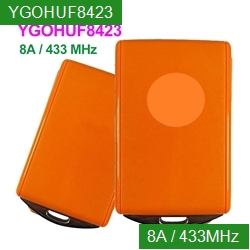 PN: 32256980 / YGOHUF8423 / 433 MHz 8A Chip 4 Buttons Orange Smart Car Key for 2016 - 2021 Volvo XC90 XC60 S90
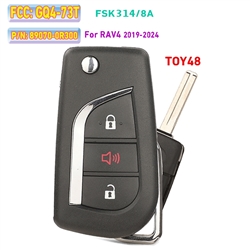 GQ4-73T P/N: 89070-0R300 FSK314.3Mhz H (8A) Chip Remote Car Key For Toyota RAV4 2019-2024
 SS114 Hozon-1 Locksmith Tools 2 in 1 Auto Pick and Decoder For NETA
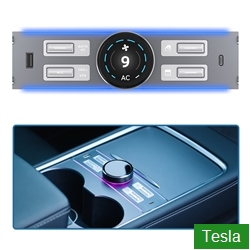 Auto LCD Smart Intelligent Control Dock USB Air Condition Controller With RGB Light Strip Windows & Glove Box Smart Control Modification Accessories For Tesla Model 3/Y
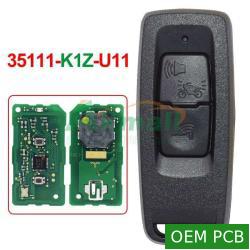 Original PCB Black 2 Buttons 35111-K1Z-U11-M1 ID47 Chip FSK433.92Mhz Smart Motorcycle Key For Honda PCX160 FORZA NSS350 2021+
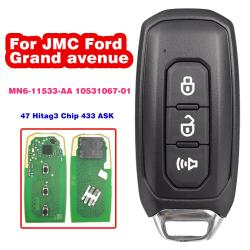 MN6-11533-AA /10531067-01 Smart Remote Key Hitag 3/47 Chip/ASK433MHz/3 Button For JMC Ford Grand avenue
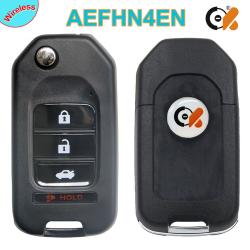 CK IR2 Series IR2-13 AEFHN4EN Universal Wireless Remote key 3+1 Buttons for Honda CK Remote Car Key